Showing posts with label Hiatt. Show all posts

Monday, October 20, 2014

John Hiatt 1746-After 1808 (1100000)

The red oval indicates the location of the Opequan Creek. The Creek empties into the Potomac River to the north, which is the northern border of present day Jefferson County, West Virginia, but was then still part of Frederick County, Virginia. John's grandfather had purchased land in the northern part of this area in 1735.
This is where John Hiatt was born about 1746.
John Hiatt was born about 1746, in what was then Frederick County, Virginia, but is now in Jefferson County, West Virginia. His parents were John Hiatt (b. 1724) and Mary Thomas. The family were Quakers. They had moved to the area by 1735, when John’s grandfather (John Hiatt b. 1696) was granted 300 acres of land on Opequon Creek. The family became founding members of the Hopewell Monthly Meeting in Frederick County. Unfortunately, few records remain from early Hopewell church, revealing little more than the family’s presence. 


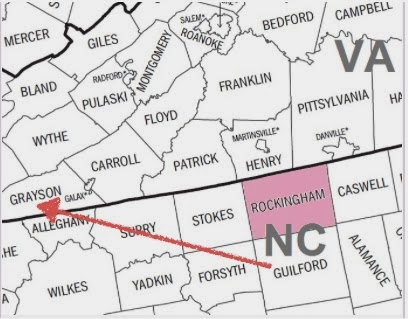
John Hiatt had relocated to Guilford County, North Carolina (see map below) by 1770, as part of the migration of many Quaker families. He appears in Quaker church records for the New Garden Monthly Meeting twice. In his first appearance, he is mentioned as having been disowned by the church for his marriage “out of unity”. This means that he had not waited for the long process that precedes a Quaker marriage. 

Preparation for a Quaker marriage involved more than just a reading of the banns for several weeks, to see if anyone had an objection to the marriage, as in other churches. Instead, a committee, generally of three men, was assigned to examine the lives of the couple. They would interview everyone who knew them, even going so far as to write to former congregations that they may have been part of to determine everyone's opinion of the couple's worthiness. 

This process generally took many months, and was sometimes known to take over a year. It is no surprise that some couples, including John & Phoebe, decided to forgo this grueling process and be married outside of the Quaker church either by a minister of another church, or a justice of the peace. John's second appearance in the records was six years later, when he had returned to the church and begged forgiveness for his "errant" marriage. 

New Garden MM, Guilford Co, NC:
29-9mo-1770 - John Hiett disowned for marriage out of unity.
30-11mo-1776 - John Hiett, Jr. condemned his marriage out of unity.

We know that he was married to Phoebe Thatcher, because in 1773 she had returned to the church and begged to be readmitted into fellowship. Since her membership records had been maintained by the Concord Monthly Meeting in Chester County, Pennsylvania, she had written to that church for their forgiveness. Her reconciliation is recorded in Concord church records. In those records, it names her as “Phebe Hiett, formerly Thatcher” which gives us both her married and maiden names. Phoebe had been attending church in Guilford County, North Carolina, and this is where she was received into fellowship at the Deep River Monthly Meeting.

Concord MM, Chester Co, PA:
4-8mo-1773 - Phebe Hiett. Formerly Thatcher, disowned some time ago, now makes acknowledgement and a recommendation received from New Garden MM [Guilford Co., NC], NC on her behalf. She removed there soon after disowned.

John and Phoebe Hiatt’s children’s births were recorded in the Deep River church records.

Deep River MM, Guilford Co, NC:
Page 19
John Hiatt
Pheby Hiatt
Ch:
John  b. 5-24-1771
Edeth  b. 10-19-1772
William  b. 11-26-1774
Pheby  b. 9-29-1776
Mary  b. 11-3-1778
Stephen  b. 9-9-1780
Martha  b. 11-22-1782 (R45)

The children of John & Phoebe (Thatcher) Hiatt are listed in the records of the
Deep River Monthly Meeting of Guilford County, North Carolina.

Shortly after their last child was born, John was again disowned. The record does not give any particulars about what his offense had been; however, from analysis of Quaker records we can get a picture of the kinds of offenses that led to disfellowship. The following is an enumeration of causes for disownment at the Hopewell MM from 1760 to 1809:

Number Offense
280 going out in marriage [“marriage out of unity”]
132 fornication
5 adultery
5 other sexual immorality
41 drinking to excess
28 a combination of offenses
22 military service
19 attending or conniving at an irregular marriage
13 quarreling or fighting
13 dancing
13 joining another denomination
9 nonattendance of meetings
4 taking the test of allegiance
3 false accusation
2 dishonesty
2 killing a mare
2 attending places of diversion
2 horse-racing
1 failing in business
1 nonpayment of debts
1 refusal to arbitrate
1 going to law
1 profanity
1 wife-beating
1 striking a man in anger
1 wounding a man
1 gaming
1 lending money for gambling
1 administering oaths
1 buying slaves
1 permitting fiddling and dancing at one's home
1 appointing meetings and preaching
[List borrowed from http://www.quaker.org/disown.html]

We can rule out the most common offenses, which were marriage out of unity, and fornication (sexual relations prior to marriage), since he was already married. If we go by the numbers, the most likely offense would be drinking in excess; however, given that the disownment took place shortly after the Revolutionary War, it is also likely that he may have been found guilty of having fortified his household, or aided the cause in some way. This was a common cause of chastisement in the day.  

Deep River MM, Guilford Co, NC:
3-5mo-1784 - John Hiatt disowned.

By 1798, both John and Phoebe had moved their membership records to Westfield Monthly Meeting in Surry County, North Carolina. 

Deep River MM, Guilford Co, NC:
2-1mo-1797 - Phebe Hiat and children granted a certificate to Westfield MM [Surry Co, NC]

Westfield MM, Surry Co, NC:
18-8mo-1798 - John Hiett received by request.

We know that they had moved to Grayson County, Virginia in 1797, because John Hiatt (called Senior, to distinguish him from his son of the same name) began to show up in tax records there. Surry County, North Carolina was just across the border from Grayson County, Virginia. Westfield Monthly Meeting, though it was across the border in another state, was undoubtedly the closest meeting to them at that time. In 1801, Mount Pleasant Monthly Meeting was organized in Grayson County, Virginia. Shortly thereafter we see that John sought reconciliation so that his membership could be moved to Mount Pleasant Monthly Meeting.

Deep River MM, Guilford Co, NC:
1-10mo-1804 - John Hiatt condemned his misconduct.
1-10mo-1804 - John Hiatt granted a certificate to Mt. Pleasant MM. [Grayson Co., VA]

Tax records in Grayson County, Virginia show us that John Hiatt continued to live there through the year 1808. At that time, many of the Mount Pleasant Monthly Meeting congregation sought for transfers to Fairfield Monthly Meeting in Highland County, Ohio. Among those who made this request, there are several members of the Hiatt family listed. John and Phoebe are not listed among them, nor is there a record extant for their being received at Fairfield Monthly Meeting. However, it is likely that they moved with the family nonetheless.

A history of Carroll County, Virginia (formed from the eastern half of Grayson County in 1842) gives the following information:
John Hiatt, Sr. sold 100 a. [acres] on Grassy Creek to Aaron Hiatt of Guilford County, North Carolina 1808

This indicates that John sold his property in Grayson County, Virginia in 1808. It seems likely that this was in order to move with his family to Ohio. He disappears from the tax list in Grayson County thereafter. No record has been found to trace him to his new home in Ohio. This is not surprising, given that there are few records surviving from those pioneer days in Ohio. The first federal census to be taken in Ohio was in 1820. John Hiatt does not appear in that census. It is probable that he had died some years before that date.

A search of tax lists, beginning in Highland County, Ohio may be necessary to narrow down the exact year of his death and to prove that he had relocated with his family.


Monday, July 15, 2013

Letha Victoria Fortney 1900-1982 (111)


Letha Victoria Fortney was born 7 Aug 1900 in Monongah, Marion County, West Virginia the first child of James Joshua Fortney and Rosanne Belle Bock. Her father was a coal miner, like most of his neighbors. It was a hard life, but the Fortneys owned a farm to supplement their father's income. They never knew want. Letha was named Leafy by her parents, but she hated the name and later changed it to Letha.


She can be found living with her parents in the 1910 Census in Lyon, Preston County, West Virginia as Leafy V. Fortney.


When she was just a teen, Letha went to work as a maid for a wealthy local family--the Campbells. There was a young son in the family, who was the same age as Letha--James J. Campbell. The son seduced her, and Letha being in a dependent state, may have held out hope that he would marry her and make her a wealthy woman. When Letha became pregnant, the Campbells learned of what was going on. They became incensed, fired her and threw her out of their home, refusing to acknowledge the child as their own grandbaby.

Letha tried to return to her parents, but they refused to take her in. It is difficult to understand in today’s world, where tolerance at all costs is the only acknowledged value, to understand why a parent would be so angry in such a situation. However, even modern day parents can have bitter disputes with wayward children, who dishonor them. Though we can wish that they had been kinder to their daughter when she was in such dire need of support, it is not our place to judge. Letha was sent to live with an aunt. At just sixteen years of age, Letha had become a single mother without any support from the father of her child or even her own parents.

Just two years after her daughter was born, Letha met and married James Travis Hyatt. It was shortly before the end of WWI, when the western world was despairing over the loss of so many young men in that terrible war. Letha must have felt lucky to have found a man of her own, who was willing to take her in and care for her and her child. They were married on 20 Aug 1918 in Shinnston, Harrison County, West Virginia. Over the course of the next seven years they had three girls--Esther, Opal and Allene--and one stillborn baby boy who was named after his father.

In 1920, they can be found living in Clay Township, Harrison County, West Virginia:


James worked as a driver at the local coal mine throughout these years, and their lifestyle was totally dependent on the coal company. They lived in the town owned by the company. They shopped at the store owned by the company. The coal for their stove upon which they cooked, and which heated their home during the cold seasons, came from the company. The power that lighted their home came from the company. The light was turned on by day, in time to wake the workmen and give them time to breakfast and get to work. The light went off at night when the company determined that all workmen should be in bed.

Coal mining is hard and dangerous work, and being so utterly dependent on the company must have taken a toll on the pride of the workmen. They formed a union to improve the lives of their families, to get the health insurance and job security that they so craved. The company, knowing that the men were utterly dependent on them, decided that they would starve the families out rather than give in to their demands.

The resulting strike must have been a terrible ordeal for Letha. She could not turn to her parents for help, since they felt that she had disgraced them, and she had nowhere else to turn when food and fuel ran out. Letha was desperate to feed her children, and begged her husband to look for another job. James refused to look for other work. He believed in the strike, and had hopes that it would end, leaving him in better condition than before.

We can imagine Letha's frustration when faced with hungry children on the one hand, and a stubborn husband on the other. The arguments quickly turned ugly, and James became violent. Letha stormed out of the house, and went to the police to have her husband arrested, claiming that he kept a still in his home and was bootlegging liquor. This was in the midst of the Prohibition years, and Letha undoubtedly relied on that as a more likely way to get James out of the house than an accusation of domestic violence.

Letha saw to it that her three youngest children were taken in by her parents, then she found a boarding house where she could stay with her eldest daughter and worked as a cook to earn their keep. She soon obtained a divorce, and continued working at the boarding house for several years.

Letha is living in a boarding house, with eldest daughter Ruth in the 1930 Census:


During those interim years, the three youngest children stayed with their father. He was abusive to them, and neglected them terribly. They became malnourished to the point that neighbors complained and county agents took them away from him. They ended up returning to live with Letha's parents, though Opal was so badly affected that she stayed in an orphanage for several months. There she could be supervised in a treatment for rickets that involved plenty of nourishing food and soaking in sunlight for periods of time every day.

There was really very little that a mother could do in those days to have control over her children. The law gave the father custody of his children automatically, and the mother had very few rights where her children were concerned. By this neglect, James lost his rights to custody of the children. This made it easier for Letha to be able to spend time with them, and eventually move out of state with them.

In the meantime, Letha met a man named Stanley Hoffman, who was in the Navy at the time. He was a friend and crew mate of Henry Chilton, who married Letha's eldest daughter, Ruth. Letha became very friendly with Stanley and eventually moved in with him, and lived with him for several years as his common law wife. In 1934 and 1935 Stanley was stationed in Maryland for about seven months and then in Virginia for another year, during this time Letha and her girls lived with him as a family. Letha's children took the name of Hoffman, so that even their school records are under this false name.

In 1935, Stanley and Henry were transferred to the base in Long Beach, California. Though Stanley wanted Letha and the girls to come with him, the fact that they were not legally married made it difficult for him to get any help from the military. He ended up leaving them behind to follow as best they could. Letha had very little money saved for the journey, but she was determined to make the move. Things had cooled down between she and Stanley by then, but Letha missed her daughter terribly and heard that there were lots of opportunities for her in California.


There were many hardships along the way. Letha herself never admitted to the difficulties, but hints from her daughters' tales, over the years, tell a story of a mother's sacrifice of skipped meals so that she could afford to feed her daughters. One very sad story is about a meal at a café where the waiter resented the fact that Letha contented herself with her bottomless cup of coffee while her daughters ate the cheapest breakfast on the menu. He showed his disdain for her poverty by stubbing out his cigarette in the bottom of her coffee cup before pouring in the coffee. When Letha got to the bottom of the cup, she found this insult in the dregs of her cup. She was sick all through the night from this.


In spite of their hardships, Letha showed her characteristic good spirits. Her daughters had many fond memories of their trip, including being awakened by their mother in the wee hours of the morning, after traveling through the night, so that they could witness the sunrise over the beautiful painted dessert. When they reached the border of California, Letha celebrated by buying the girls a bag of oranges, which were a rare treat for girls from the east coast in those days.


When they reached California, Letha and the girls moved into an apartment next to Ruth, and Letha went to work as a cook at a local diner to support her family, while Stanley was out at sea. Stanley still spent his leave with Letha, but she largely supported herself at this time. In 1940, when Letha applied for Social Security she applied under the name of Letha Fortney Hoffman. This application lists the names of her parents and her birth date and place. Though the Hoffman name may confuse the issue, it still makes it clear that Letha Fortney Hoffman is the same person as Leafy V. Fortney.

She appears in the 1940 Census in Long Beach, Los Angeles, California, living with Amos Stanley Hoffman and her youngest daughter, Allene, still at home:


It was at this time that the United States became involved in the war, and Stanley Hoffman and Henry Chilton were among the first to be sent to the battle zones. The war took a major toll on everyone. Stanley Hoffman was heard from less and less. Henry Chilton was injured in a battle that caused more mental than physical damage. He became so mentally disturbed, that at one point he attacked Ruth with a knife. He was admitted to a mental hospital, and Ruth obtained a divorce. She could not trust such a dangerous man in the home with her small children.

Letha & Wallace Edson

Letha's girls pulled together to help care for the children while Ruth went to work full-time. As the years of war progressed, Letha felt that it was time to find another husband for Ruth. Living in Long Beach, they were within easy distance from the Naval base there. Letha took her single daughters to dances, and for visits to the base. On one such visit, they asked a young officer for a tour of one of the huge battleships. He was eager to please these lovely young ladies, and soon obtained permission.

During the tour, Letha kept trying to endear Ruth to this tall, kindly and handsome officer--Wallace Edson. He was an impressive man, seven feet tall with a deeply resonant yet mild voice. Letha thought that he would make a wonderful son-in-law, but for some reason Ruth was not interested in him. This did not bother Wallace, who was most impressed with Ruth’s mother. He enjoyed Letha’s warm interest and her delightful sense of humor. He learned where Letha worked, at a local diner as a cook, and went to eat there frequently in the coming months.

They fell in love, and were married early in the year 1941, traveling to Illinois for the wedding, since that was where the Edson’s had come from. Letha had finally met her match in intelligence, and kindness. He was the love of her life. Letha converted to Catholicism, through the influence of Wallace's family, and remained a devote Catholic throughout the rest of her life. These final years were filled with the contentment of a happy home, and the love of her husband, children and grandchildren. Her marriage with Wallace lasted for over forty years, until Letha’s death in 1982. Wallace never married again after her death.

Letha shares a stone with her beloved husband, Wallace Edson, where they are buried in the Sacred Heart Catholic Cemetery in Tillamook, Oregon near his parents:


The record of her burial reads:


***
SURNAME EDSON
First Name Letha
Death Yr 1982
Death Date 9 /2 /1982
Birth Date 8 /7 /1908 [This year is wrong. She had given her husband false information about her age, since he was much younger than she was. She was 10 in the 1910 Census, which gives us a better estimate of when she was born.]
BirthYr 1908
BirthPlace
Spouse Name Wallace H EDSON
MaidenName FORTNEY
[No cemetery name given, but she was buried in Sacred Heart Catholic Cemetery. Transcribed by TILLAMOOK COUNTY PIONEER MUSEUM]

California Death Index, 1940-1997
Name: Letha Victoria Edson [Letha Victoria Fortney]
Social Security #: 556221506
Sex: FEMALE
Birth Date: 7 Aug 1901
Birthplace: West Virginia
Death Date: 2 Sep 1982
Death Place: Santa Barbara
Mother's Maiden Name: Bellerock [This is unfortunately how the name appears, the clerk must have misheard/misunderstood the name--Roseanne Belle Bock.]
Father's Surname: Fortney

Saturday, December 22, 2012

Matilda Jane Hawkins 1863-1933 (1101)


Licking River

Matilda Jane Hawkins was the daughter of Hansford Hawkins and Rhoda Ann Fletcher. She was born 5 January 1863 in Adair County, Missouri (we know from Census records that her parents were living in Clay Township then, post office Wilmothville). Her marriage license confirms her maiden name. Her son, James Travis Hyatt's Social Security Application as well as his death record also confirm her maiden name was Hawkins. Her birthdate is confirmed by her death certificate.

Matilda was born during her parents temporary residence in Missouri. They had moved there with extended Hawkins family, to take advantage of the lower rates for land. Within a few years of their arrival there, the coming Civil War began to cause outbreaks of violence in Missouri. It must have been a difficult time for the family. Matilda's father relocated the family back to Kentucky to be near family.

The Hawkins family moved from Clay Township, Adair, Missouri back to
Popular Plains Precinct, Fleming, Kentucky about 1863

Though the war years devastated many families, Matilda's family came through without a great deal of loss or hardship. This was probably due to the fact that the mountainous region in which they lived was spared any battles or depravations from enemy troops. Matilda appeared in the 1870 Census (Poplar Plains Precinct, Fleming County, KY) with her parents (Hansford Hawkins and Rhoda Ann Fletcher).

1870 Federal Census
Bath & Fleming Counties share
a border along the Licking River.
The Hawkins family lived on
land adjacent to this river.


Matilda was married in the family home on the 28th of August in 1879, to Jonathan Edgar Hyatt in Bath County Kentucky. The license reads, "State of Kentucky, Bath County. It is hereby certified, that under and by virtue of the within License, I did, on the 28th day of August 1879, at the house of Hansford Hawkins in said county, celebrate the rites of Matrimony between the within named J. E. Hiatt and Matilda Hawkins and that Charlie Wallingford, W. N. Hiatt were present and witnessed the celebration. Given under my hand, this 28th day of August 1879. J. H. Wallingford, Minister, C. A. Baptist Church"
Marriage License of Matilda Jane Hawkins
She appears in the 1880 Census in her in-laws home with her husband (where she is listed as daughter-in-law to the head of household).
Name:
Edgar Hiatt
Age:
27
Birth Year:
abt 1853
Birthplace:
Kentucky
Home in 1880:
Bethel, Bath, Kentucky
Race:
White
Gender:
Male
Relation to Head of House:
Son
Marital Status:
Married
Spouse's Name:
Matilda Hiatt
Father's Name:
William Hiatt
Father's Birthplace:
Kentucky
Mother's name:
Lavina Hiatt
Mother's Birthplace:
Kentucky
Occupation:
Laborer
Household Members:

Jonathan and Matilda Hyatt had the following children:
1) Lavina Hyatt b. Feb 1881 Bath, KY
2) George William Hyatt b. 22 May 1884 Bath, KY
3) Robert Hyatt b. 13 Jul 1887 Bath, KY; m. Mary Thompson
4) Rhoda Hyatt b. Sep 1890 Bath, KY; m. John Frank Igo
5) Edgar Hansford Hyatt b. 29 Jul 1893 Bath, KY
6) Jefferson Evert Hyatt b. 16 Nov 1896 Bath, KY; d. Feb 1969 Douglas, Cochese, AZ; m. Iva M. Hyatt
7) James Travis Hyatt b. 16 Jul 1899 Bath, KY; d. 25 Jun 1969 Morgantown, Monongalia, WV; m. Letha Victoria Fortney

The 1900 Census says they had been married 22 years. They lived in Owingsville, Bath County, Kentucky.


After Jonathan Edgar Hyatt died, Matilda married again. She shows up in the 1920 Census living with Frank and Rhoda Igo (her daughter), and named Matilda Brooks. She was already widowed again.


In 1930 she is still living them (Frank and Rhoda Odo) in Cass Township, Monongalia, WV and still Matilda Brooks. Her death record (which gives her name as Matilda Hawkins Brooks) gives her birth and death dates, as well as her mother's maiden name (though her father's name is wrong).


One of Matilda's granddaughters said that her grandmother was full of superstitious beliefs about many things. The granddaughter was sympathetic about her beliefs in some things, particularly in that Matilda would often tell stories about people who had premonitions about things to come. One story she remembered in particular was of a woman who heard a sound like a load of coal being delivered to her doorstep that woke her in the night. As she came to her door to see what had happened, she heard the alarm sound at the mine where her husband worked. She knew at that moment that he had been killed in a mining accident, and he had.

James Travis Hyatt, Matilda's son, was always skeptical of his mother's stories. He would shrug them off as part of her ignorance. But on the day that Matilda died, he came to believe. He heard a knock on the door, and told his daughter to answer it. The doorway was at the end of a narrow passage that led past their front window, and they had not seen anyone pass by. The daughter went to answer the door, but no one was there. When she returned to tell him that, he got a peculiar expression on his face as if he were frightened. That night they learned that Matilda had passed away about the time of the knock on the door.

Her granddaughter also said that the spirit of her grandmother, Matilda, came to visit her shortly after Matilda's death. The granddaughter dreamt that the wall of her room moved aside like a curtain, and her grandmother came through it with two beings dressed in white. Matilda would not let her granddaughter approach her, but told her she had a message for her. She insisted that her granddaughter never lose her faith in God. When the granddaughter awoke the next day, she turned to her sister to tell her about the vivid dream that she'd experienced. As she described it, her sister looked at her with a surprised expression, and said that she had the same dream that night.

Matilda's death date comes from her death certificate which gives her death date as 21 Jun 1933 in Monongalia WV. Her death certificate also says that she is buried in Monongalia County Cemetery. I have not yet obtained a photograph of her grave marker.


Note: There is a Kentucky Death Record listed that is NOT her. Do not be fooled by it. If you look at the actual record it says that she is colored, her husband's name is Ruben Hyatt, and her father's last name is Bonner, not Hawkins. Name: Matilda (Hawkins) Hyatt  Death Date: 26 Oct 1927  Death Place: Jefferson  (KY) Age: 069   Volume: 47   Certificate: 23190. 

Sunday, November 25, 2012

William Hiatt Bef. 1775-Aft. 1820 (1100000)


Quaker records from the Deep River Monthly Meeting in Guilford County, North Carolina
indicate that William was born the 26th day of the 11th month in 1774 to John & Phebe Hiatt.
William Hiatt is found in the 1820 Census in Fleming County, Kentucky, listed as over 45; so, for many years researchers only knew that he was born before 1775. Since he disappeared from records thereafter, this was all they had to go on. They had no records that showed where he was born, or even where he died. To complicate matters further, they were misled in their research by an interview of one of William’s grandsons that was published in 1896. That interview was the source of some information—and some misinformation—about the family.

Here is a trascript of the interview:
From: GOLDEN WEDDING ANNIVERSARY 1896 Holt Co. Mo

Being interviewed in regard to his ancestry Mr. Hiatt said. "The old stock of Hiatt's came across the Briney Deep with Wm Penn and located in Pennsylvania. My Grandfather William Hiatt, "Packed" over the Blue Ridge in 1808, going to OH. My father, Stephen Hiatt, was born in Pennsylvania in 1798 and was about 10 years old when grandfather left for Ohio. After reaching Ohio grandfather built a log cabin and lived in it for two years when he sold out and moved farther west, lived awhile and moved West again, and got as far as Cincinnati. From Cincinnati, he went over into Kentucky and figured (sic) around considerable with Daniel Boone."
-------------------------------------------------------------< {} >-----------------------------------------------------------

The father mentioned in this account—Stephen Hiatt—was the son of  our William Hiatt. William is the grandfather mentioned in the interview. The interview is mostly accurate, from what we now know of the Hiatt family. The first Hiatt who came to America—John Hiatt—was a Quaker. He did arrive in America about 1699, with his in-laws the Smiths. That was the year that William Penn made his final voyage to Pennsylvania, and it is likely that the Hiatts and Smiths arrived with Penn on that voyage. 

John Hiatt and his wife died in Pennsylvania. However, their sons relocated to the Shenandoah Valley in what is now West Virginia by the mid-1730s. From there they moved south to the border between North Carolina and Virginia. Two generations later, they made the move into Ohio. The interview skips over the interim two generations, and goes straight from Pennsylvania to the move into Ohio.

Shenandoah Valley, oil on canvas, William Louis Sonntag, Sr., 1859–1860. Virginia Historical Society

It is likely that the interviewee remembered stories from his grandfather about the early family coming to Pennsylvania with William Penn, and other stories about his grandfather leaving his early home to move to Ohio before coming to Kentucky. The interviewee may not have understood the many years that fell between these two events, and falsely concluded that his father was born in Pennsylvania. At any rate, those skipped generations led researchers to search for William's origins in Pennsylvania, instead of North Carolina where he was actually born, or in Virginia where he spent his early marriage years.

William did indeed “pack over the Blue Ridge” when relocating to Ohio, but it was from southern Virginia, and not Pennsylvania that he traveled. All of the Hiatts from our family line had relocated to Virginia by the mid-1730s. The later all moved down into North Carolina, just across the border from Virginia, where William was born.

William was just six years old when the Battle of Guilford
Courthouse was fought near his home. Since the Quakers in
the area took care of the injured men after the battle, it is likely
that his family also took on the care of some of the injured.
That interview was one source of misleading information. Another source was an early Hiatt family researcher who claimed that she had located William’s wife. She had found an Elizabeth Hiatt, living in Platte County, Missouri for the 1860 Census. This Elizabeth was 74 years old at the time, so would have been born about 1786. Since this researcher had found that Stephen Hiatt (son of William) had a son William Thatcher Hiatt who had moved to Holt County, Missouri (two counties removed from Platte County) by 1870, that perhaps this Elizabeth was related to him. 

It was an enormous leap from finding Elizabeth Hiatt in a nearby county a decade before William Thatcher Hiatt moved to the state, to connecting her to the Stephen Hiatt family. To then further claim that Elizabeth was wife of William, who had died nearly forty years before this and in eastern Kentucky no less, was tremendously improbable. To make matters worse, they then gave her the suppositional maiden name Thatcher, based on the name of William's second son Thatcher Hiatt. Once this completely made up information hit the internet, it spread beyond control.

A careful examination of the facts shows that this Elizabeth Hiatt would have been born too late to have mothered William’s children. She would have been only eleven years old when William’s first son Allen was born (about 1797), and about fourteen when his second son Thatcher was born (about 1800). Since she would have been so very young, it is unlikely even as speculation that a woman born in 1786 would be the mother of Thatcher Hiatt. Now that we know the actual source of Thatcher Hiatt's name, it has become even more unlikely that this speculative "Elizabeth Thatcher" ever existed.

William Hiatt moved from Guilford NC to
Grayson VA about 1797.

Having researched William Hiatt’s children through marriage, census and death records, I have learned that at least the first six of them were born in Virginia. From this we know that William was living in Virginia from about 1797 (when Allen was born) through about 1807 (when Betsy was born). All of the Hiatts who lived in Virginia during this period of time were related to one another. Through painstaking research in Quaker church records, land and tax records, I was able to place William Hiatt as the son of William Hiatt & Phoebe Thatcher. At last we had found the real source of Thatcher Hiatt's name.


William’s birth was recorded in Quaker records at the Deep River Monthly Meeting as 26 November 1774. With this new information, I was able to trace William from his birth in Guilford County, North Carolina, to his marriage in the same county in 1797. William Hiatt and Charity Hoggatt were mentioned in Quaker records as having married “out of unity” in 1797. 

From Deep River Monthly Meeting records we get the following:
1797, 6[th month], 5[th day] Charity (Hiett) (form[erly] Hoggatt) dis[missed] mou
1797, 11, 6 William (Hiat) dis mou (rem[oved])
[“mou” stands for “Marriage Out of Unity”]

Trail in Grayson County, Virginia
Marriage “out of unity” means that they were married by a minister, or justice of the peace, who was not of the Quaker persuasion. Such marriage was quite common in the Quaker records. It was difficult to marry within the Quaker church. The first step in the process was to approach the elders to announce the intention to marry. The elders would then assign several members to perform what amounted to a background check. They would speak with everyone who knew the couple, to discover if they knew of any sins that had been unreconciled. This process could take many months to complete, sometimes over a year, since the elders were in no hurry to unite the couple.

If the couple did not want to wait through that long rigorous process, they would get married outside of the church and ask for forgiveness later. It is likely that this is what William and his bride had in mind. However, they may never have returned to the church to beg forgiveness. No record of their reconciliation has been found.

William and Charity (Hoggatt) Hiatt had the following children:
Beautiful Carroll County, Virginia
1) Allen Hiatt b. 1797 VA; d. aft 1820 Fleming KY
2) Stephen Hiatt b. 1798 VA; d. aft 1850 Platte County, Missouri
3) Thatcher Hiatt b. 1800 VA; d. aft. 1840 Gallia, Ohio
4) Nancy Hiatt b. 1803 VA
5) Sallie Hiatt b. 1805 VA
6) Betsy Hiatt b. 1807 VA
7) John Hiatt b. 1809 (probably OH)

[Note: There may be a son who is unaccounted for, shown in the 1820 Census as born 1810-1820.]

Since the Quaker records indicate that William relocated after his marriage in 1797, it is likely that it was at that time that he moved across the border from Guilford County, North Carolina to Grayson County, Virginia. The rest of his family settled in Grayson County that same year. William can be found in the tax lists in Grayson County from 1797 through 1807.

The Hiatt family lived in what was then Grayson County (now Carroll County) Virginia. Their church records were kept in Surry County, North Carolina, just across the border. since that was the nearest Quaker Monthly Meeting before Mount Pleasant Monhtly Meeting formed in 1801. The part of Grayson County where the Hiatts lived was very near the border between Virginia and North Carolina. The Quakers who lived in their area attended Westfield Monthly Meeting in Surry County, North Carolina, since there were no Monthly Meetings in Grayson County in 1797

Mount Pleasant Monthly Meeting formed in Grayson County, Virginia in 1801. The extended Hiatt family began attending Mount Pleasant Monthly Meeting shortly after it formed. William’s extended family—uncles and cousins—as well as his parents can be found mentioned in Mount Pleasant records. 

William Hiatt's migrations from Ohio
through various Kentucky counties.


Between the years 1808 and 1813, the Mount Pleasant Monthly Meeting records indicated that the greater part of the Hiatt family were relocated to Fairfield Monthly Meeting in Highland County, Ohio. William probably left for Ohio with his parents and siblings about 1808, when he disappears from tax records in Virginia. 


By 1817, William had relocated to Kentucky. His migrations in Kentucky took him through Campbell County where three of his children married:
May 3 1817-Allen HIATT to Polly DRYSDALE bm-James DRYSDALE
Dec 6 1817-Stephen HIATT to Lucy MORRIS bm-Thomas MORRIS
Aug 3 1818-Landon BONUM to Nancy HIATT bm-William HIATT


The 1820 Census finds the family in Fleming County, Kentucky. William is living next door to Thatcher Hiatt, and a few doors away from Allen Hiatt, two of his sons. 

Wm (William) Hiatt in 1820 Federal Census, Fleming County KY.
Note that son Thatcher Hiatt is listed next door, and another son Allen Hiatt is listed further down the page.


William's son, Thatcher Hiatt, married Esther Hunt Green Markwell in Fleming County KY in 1820. Within a few years they had relocated again to Greenup County KY where three more of the children married:

Rice, Jeremiah m. Sally Hiatt 24 Mar 1824 Greenup County KY
Griffith, Jesse m. Elizabeth Hiatt 21 August 1827 Greenup County KY
Hiatt, John m. Mahala Brammer 16 July 1830 Greenup County KY

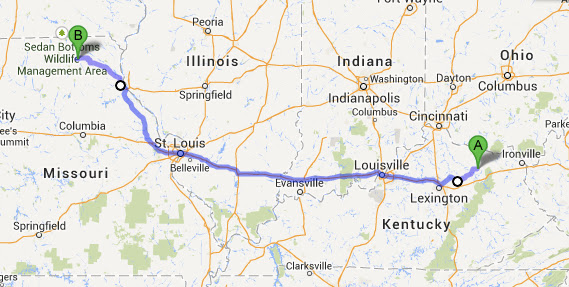
By 1840 the family had dispersed from Greenup County KY to Missouri, Ohio and perhaps Indiana. William has not been located in the 1830 Census, and probably died in Greenup County sometime after 1820.